Inconel has a reputation in machine shops, and it is well-earned. Nickel-based
superalloys are among the most difficult materials to machine commercially, and the
failure modes they produce are fast and expensive: premature edge wear, notching,
work-hardening ahead of the tool, and heat generation that degrades tool life in a
fraction of the expected time. If you have machined hardened steels, titanium, and
difficult stainless grades and still find Inconel in a different category, you are not wrong.
The challenge is not that nickel superalloys cannot be machined. They are machined in
volume in aerospace and power generation facilities every day. The challenge is that
they do not tolerate the compromises that production machining sometimes accepts in
less demanding materials. Wrong carbide grade, wrong coating, slightly wrong
geometry, or speeds and feeds that wander outside a tight window will end the tool life
early, often dramatically early.
Why nickel superalloys are so difficult at the cutting edge
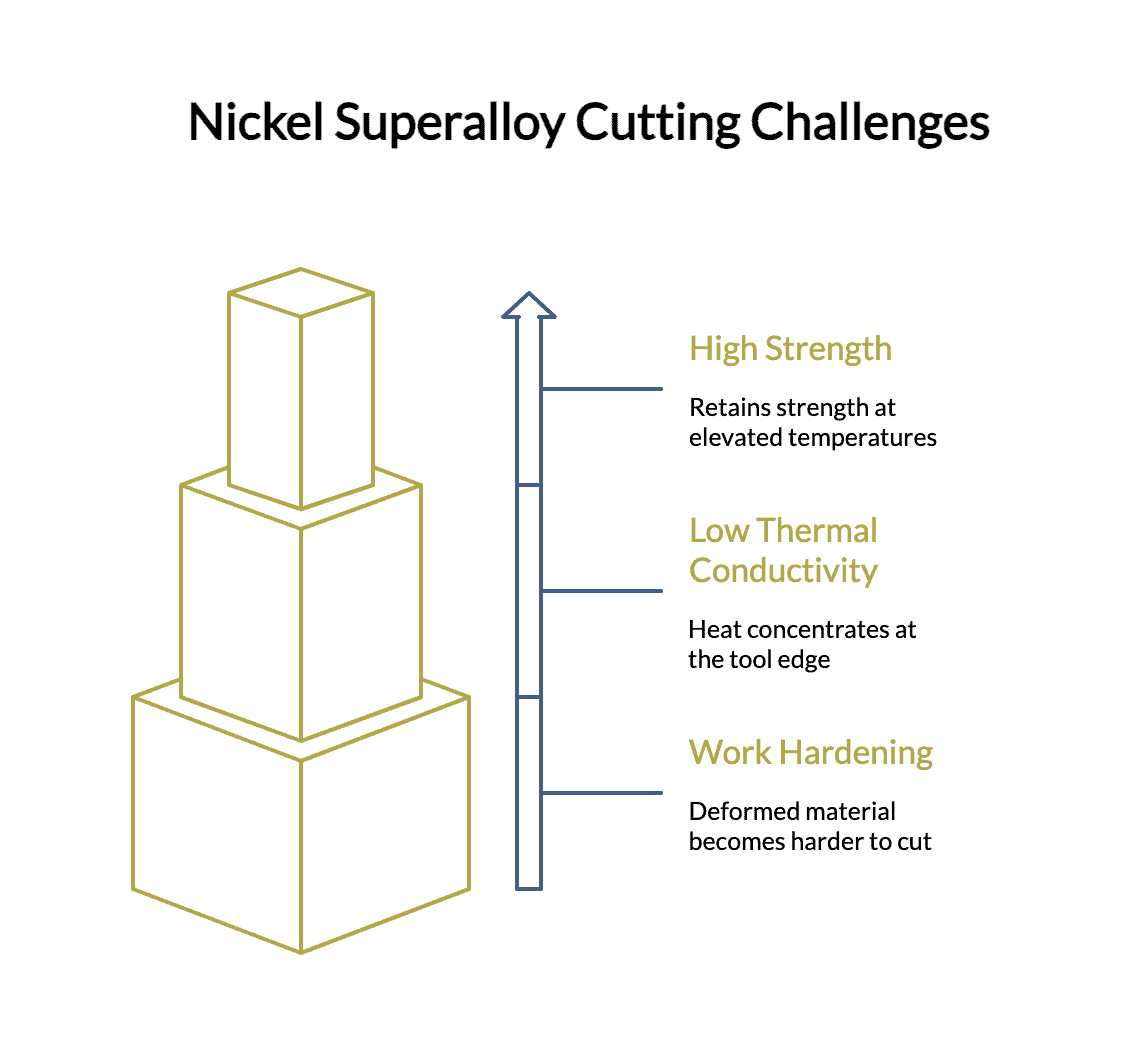
Inconel 718, Inconel 625, Waspaloy, Hastelloy, and their relatives share a set of
characteristics that make the cutting zone hostile: high strength at elevated
temperature, low thermal conductivity, and a strong tendency to work-harden.
High strength at temperature means the material is still mechanically demanding to cut
even when the cutting zone generates significant heat. Most metals soften at elevated
temperature, which is part of what makes high-speed machining possible. Nickel
superalloys retain their strength, which keeps cutting forces high even as heat
accumulates at the edge.
Low thermal conductivity means heat generated at the cutting zone does not conduct
efficiently into the workpiece or the chip. It concentrates at the tool edge. The same heat
load that would spread out in carbon steel stays localized in Inconel, accelerating tool
wear through thermal mechanisms rather than just mechanical wear.
Work-hardening is the compounding factor. If the tool allows the material to deform
ahead of the cutting edge rather than cutting it cleanly, the work-hardened layer in front
of the tool becomes increasingly difficult to cut. Rubbing rather than cutting accelerates
this cycle: edge radius builds up, cutting forces rise, and wear accelerates.
What the tool actually needs to survive
For Inconel and nickel superalloy work, tooling decisions carry more consequence than
for most materials. The following variables matter more than in general-purpose
machining.
Carbide grade: the substrate needs to be tough enough to handle the mechanical
cutting forces without chipping, but hard enough to resist abrasion and thermal wear at
the edge. Sub-micron and ultra-fine grain carbide grades provide the right balance for
most nickel superalloy applications.
Coating: AlCrN is typically the strongest coating choice for nickel superalloys due to its
oxidation resistance at high cutting temperatures and its toughness against mechanical
shock. TiAlN performs well in many Inconel applications, particularly when cutting
speeds can be managed carefully. Thermal resistance is the priority, not just surface
hardness.
Geometry: positive rake angles reduce cutting forces and help the edge cut rather than
plow. Sharp edge prep is essential. A slightly dull or over-honed edge in Inconel will rub
rather than cut, work-harden the material ahead of the edge, and accelerate failure.
Helix angle affects chip formation and evacuation, which in a material that adheres
readily to tool surfaces matters considerably.
Edge sharpness over the tool life: Inconel is not forgiving of edge radius creep. This is
one reason tool life management in nickel alloy work is often held tighter than in other
materials, and why knowing when to change a tool is almost as important as choosing
the right one.
Speeds and feeds: the tolerance for error is narrow
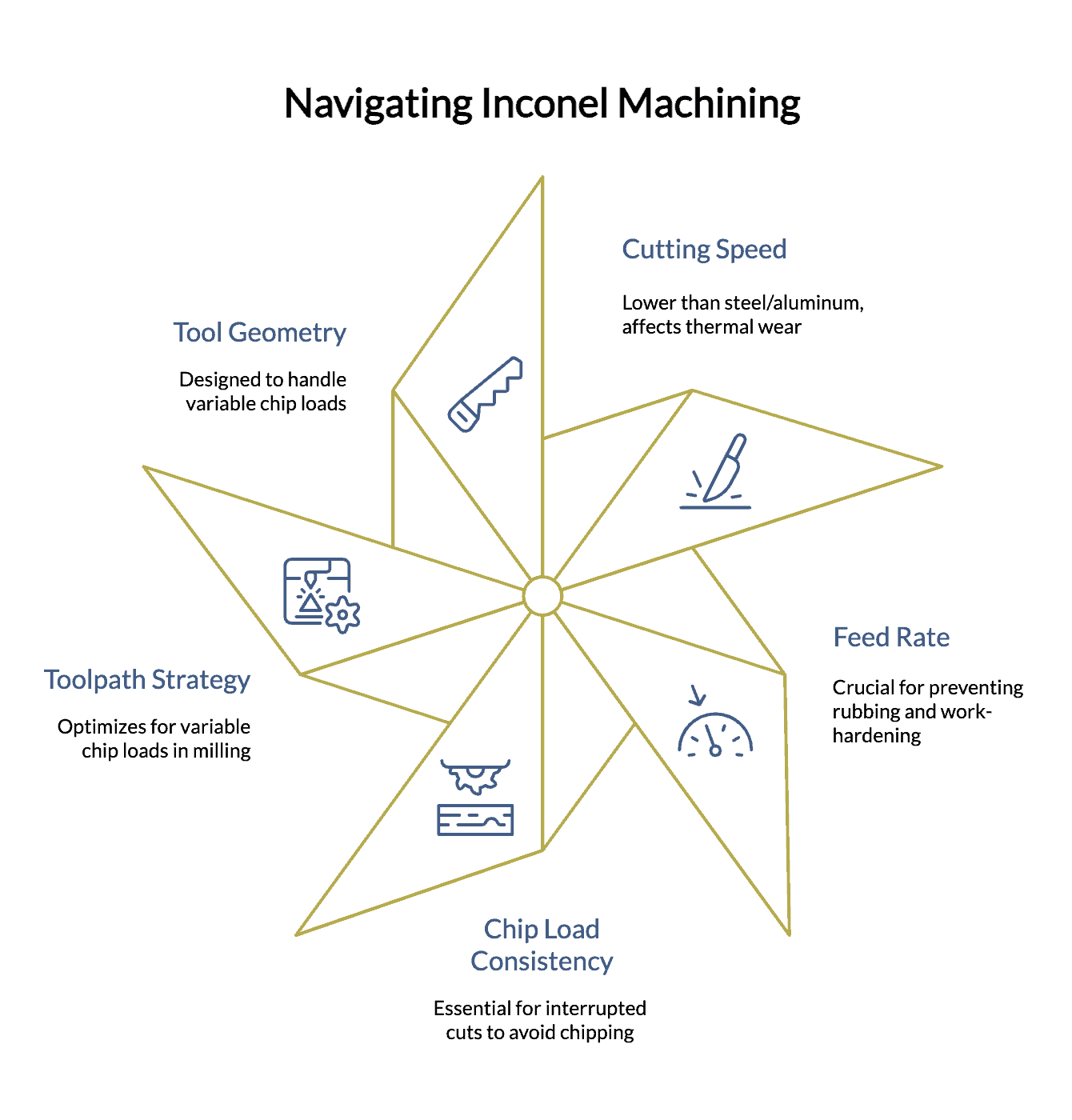
The cutting speed range for Inconel is significantly lower than for steel and aluminum.
Most production applications with solid carbide tooling run surface speeds in the range
of 40 to 80 SFM, with newer geometries and coatings pushing toward the higher end.
Running above the recommended range accelerates thermal wear extremely quickly.
Running below it risks rubbing and work-hardening the workpiece surface.
Feed rate matters equally. A feed that is too light generates more rubbing than cutting,
which contributes to the same work-hardening cycle that limits edge life. This is
counterintuitive for machinists who have learned that reducing feed lowers tool stress in
difficult materials. In Inconel, the correct response to edge wear issues is usually to
examine whether feed is in the right range, not just whether it is too high.
Chip load consistency is particularly important in interrupted cuts. Entry and exit
transients in milling, where chip load changes at the start and end of tool engagement,
are where chipping tends to initiate in nickel superalloy work. Toolpath strategy matters
here, and so does tool geometry that handles variable chip loads without catastrophic
edge failure.
Coolant strategy in nickel superalloy work
High-pressure coolant through the tool is strongly preferred in drilling and reaming
applications in nickel superalloys. Getting coolant to the cutting zone in a deep hole with
a material that generates concentrated heat is not optional. In milling, flood coolant
directed at the tool-workpiece interface manages chip evacuation and limits thermal
cycling at the edge.
Thermal cycling itself is worth managing carefully. Interrupted coolant that causes the
cutting zone to heat and cool repeatedly can introduce thermal fatigue into the tool
edge. Consistent coolant delivery, properly aimed and maintained, is more important
than raw volume.
When to bring the tooling conversation to a manufacturer
If you are currently running Inconel or another nickel superalloy and your tool life is
inconsistent, or significantly shorter than expected, the starting point is usually a
detailed look at the full tool system: grade, coating, geometry, and operating parameters
together. Changing one variable at a time in a difficult material can produce misleading
results, because the variables interact with each other more than they do in easier
materials.
Epic Tool manufactures solid carbide cutting tools from premium sub-micron carbide
grades with application-specific multi-layer coatings at our facility in Stoney Creek,
Ontario. We supply tooling to the aerospace and power generation industries and have
been working through difficult alloy applications for over twenty years. If you are dealing
with a nickel superalloy problem that standard catalog tooling is not solving, contact our
team.