
The transition from internal combustion to electric vehicle production is not just a
change in what gets built. It is a change in what gets machined. Shops that have spent
decades optimizing tooling for cylinder blocks, crankshafts, and transmission housings
are now being asked to produce battery tray enclosures, motor housings, copper
busbars, and thin-wall structural castings in aluminum alloys they have not run before.
The tooling that worked for the last program may not be the right fit for the next one.
This is not a problem unique to large OEM suppliers. Contract manufacturers across
Ontario and across North America are seeing it in their own shops: EV-related work is
arriving with different material specifications, different feature tolerances, and different
production volume expectations than the engine components they were built around.
Getting the tooling right from the start saves considerable adjustment time and scrap
later.
The material mix is shifting, and it requires different approaches
High-silicon aluminum alloys are the most significant change for most shops doing
structural and enclosure work. Alloys like 380, 390, and hypereutectic variants with
silicon content above 12% provide the casting performance and weight reduction EVs
require, but the silicon particles in the microstructure are highly abrasive at the cutting
edge. Standard aluminum tooling with uncoated carbide or general-purpose coatings
wears significantly faster in high-silicon alloys than in the 6061 and 7075 work most
shops are used to.
For high-silicon aluminum, diamond-coated tools and DLC-coated solid carbide are the
standard solutions. The extremely hard, low-friction surface of diamond coatings resists
silicon abrasion and prevents aluminum adhesion simultaneously. In high-silicon
aluminum machined at production volumes, DLC or diamond-coated tooling typically
reduces cost per part substantially because edge life is dramatically longer than with
general-purpose alternatives.
Copper presents a different challenge. Copper is machined in EV production for
busbars, motor windings, and power connectors. It is soft and very ductile, which means
it tends to smear and adhere at the cutting edge rather than forming clean chips. DLC
coatings and sharp, high-positive rake geometries are again the right starting point,
combined with chip evacuation strategies that clear the material away from the tool
quickly.
Battery structural components frequently use thin-wall aluminum castings and some
magnesium alloys for maximum weight reduction. Thin-wall machining is its own
problem set: the workpiece deflects under cutting forces if the approach is not managed
carefully. Tool selection, toolpath strategy, and fixturing work together here, and getting
the entry angle and chip load right matters more than in rigid, thick-wall workpieces.

Motor housing and drivetrain component work
Electric motor housings and drivetrain components require bore diameter control and
surface finish tolerances that are comparable to, and in some cases tighter than, the
powertrain components they are replacing. Bore diameter control in motor housings
affects bearing fit and, ultimately, motor noise and efficiency. The tolerances are not
new problems, but the materials sometimes are: EV motor housings are often produced
in aluminum alloys that differ from traditional cast iron or aluminum automotive work,
and water-cooled housing geometries introduce complex internal features that standard
tooling handles poorly.
For applications where bore diameter must be held tightly across a production run in
aluminum, reaming is the standard final operation. The difference between a catalog
reamer and a purpose-built one shows up in whether you are holding tolerance at the
500th part the same way you held it at the 10th.
Volume and cycle time pressure
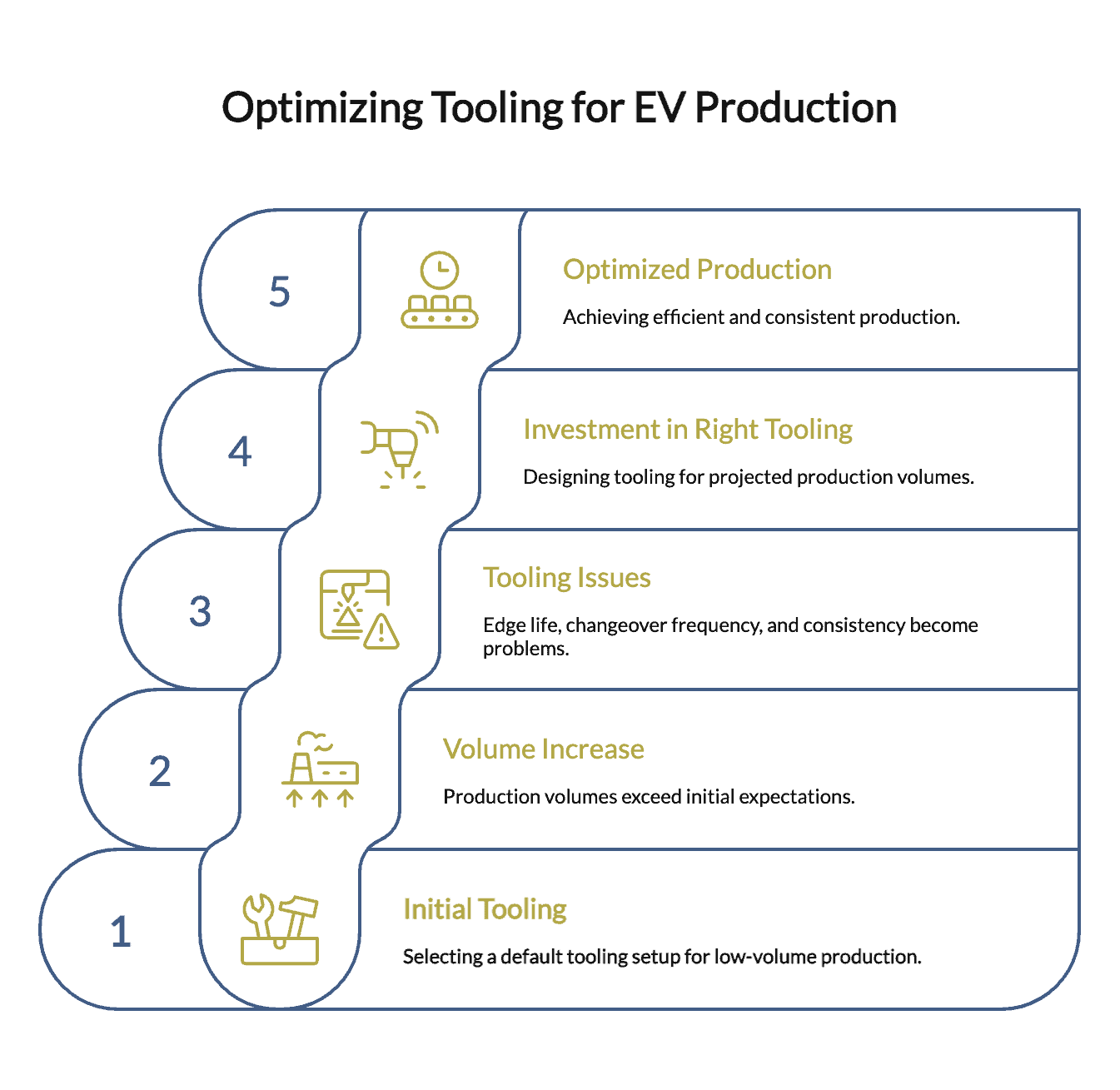
EV production volumes are scaling faster than many shops planned for. What starts as
a development or low-volume program often ramps to production rates that the original
tooling program was not designed to handle. A tooling setup that was acceptable at 200
parts per month becomes a problem at 2,000 parts per month: edge life, changeover
frequency, and consistency across edges all become cost drivers that were invisible at
lower volume.
Investing in the right tooling at the start of a program, rather than starting with a catalog
default and adjusting, pays back quickly when volume ramps. If you know the
production trajectory of a program, you can design the tooling to that volume and avoid
the optimization cycle that burns time and material during ramp.
A local manufacturing advantage
Ontario is one of the primary manufacturing locations for EV production in North
America. Toyota, Honda, and multiple Tier 1 suppliers are actively producing or
converting facilities in the region. For shops in Southern Ontario, EV-related machining
is not a future conversation. It is arriving in RFQs and on the shop floor now.
Epic Tool manufactures precision carbide cutting tools in Stoney Creek, Ontario. Being
a domestic supplier matters when programs are ramping: shorter lead times, faster
troubleshooting conversations, and a supply chain that does not depend on international
shipping windows. If you are seeing EV work arrive in your shop and want to discuss
tooling for unfamiliar materials or features, we are close enough to come and look at the
job with you.