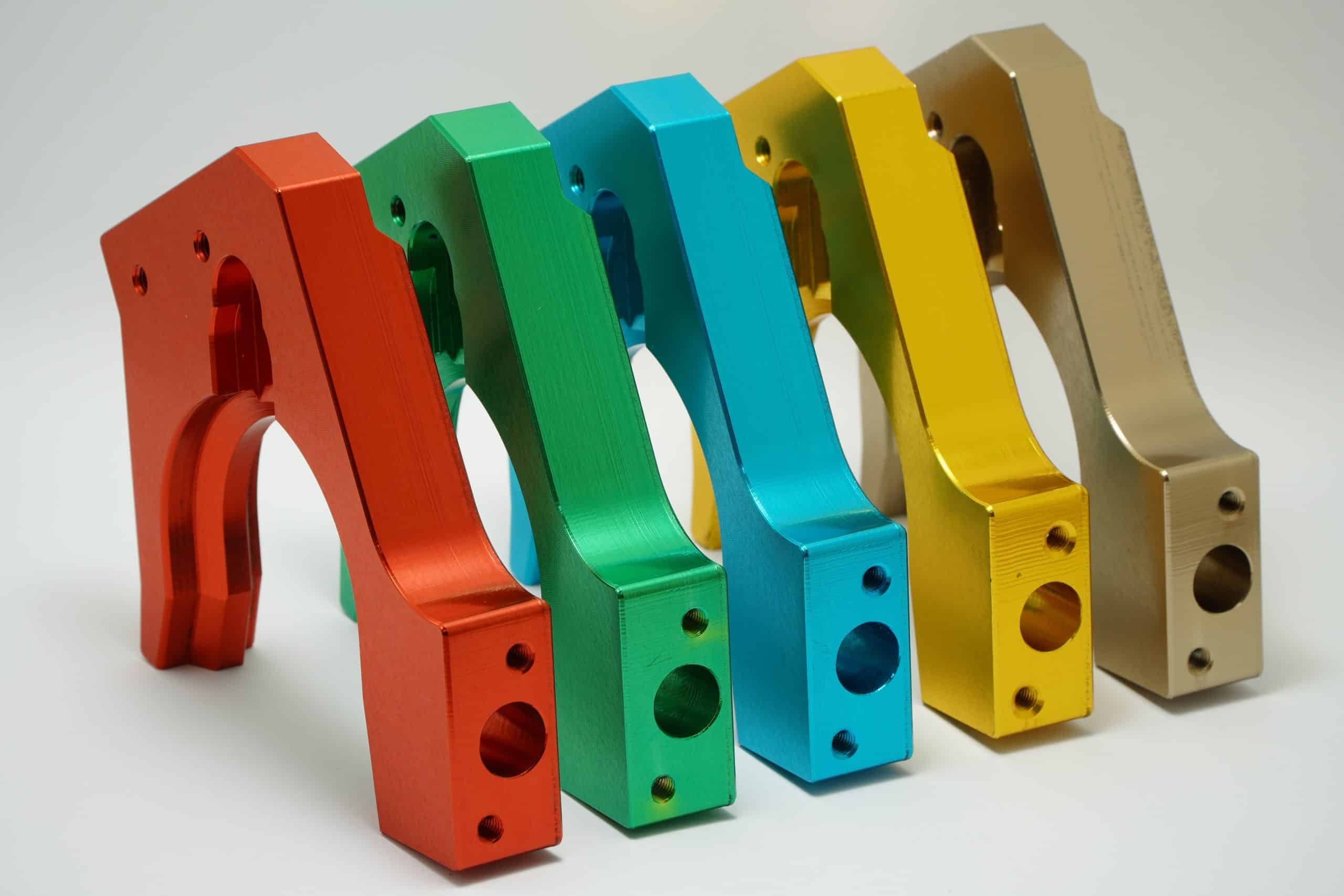
The print says aluminum, anodize black. Purchasing pulls whatever bar is in stock, and one batch comes back jet black while the next looks mottled gray-brown. Or the alloy machines beautifully, then takes a hard coat that is softer than the customer expected.
Picking an aluminum alloy for anodizing is a two-sided decision. The material has to cut cleanly on your machines and finish well in the tank, because the benefits of anodizing aluminium for machined parts only show up when the alloy cooperates. In this post we compare the common machining grades by how they anodize, explain why certain alloying elements cause trouble, and show how alloy choice changes the cutting tools you should put in the spindle.
How Common Machining Alloys Compare After Anodizing
Each alloy anodizes to its own appearance, even in an identical process. That matters most on aerospace brackets and housings, where 7075 and 6061 often share an assembly and any color mismatch is obvious.
-
- 6061-T6: a matte silver-gray clear coat and a dark gray hard coat.
-
- 6063: a little more silver than 6061.
-
- 7075-T6: a gray to brown tint, with a bronze hard coat.
-
- 2024 and other 2xxx alloys: a yellow, softer coating.
-
- 2011: not recommended for hard anodize.
-
- High-silicon cast alloys: gray or black smut with patchy coverage.
Why Copper, Silicon and Zinc Change the Finish
The alloying elements that make aluminum strong or easy to cast are the same ones that disrupt the oxide. The Aluminum Anodizers Council flags three in particular.
-
- Copper makes anodizing more difficult and leaves a softer coating with lower corrosion resistance.
-
- Silicon does not anodize, so high-silicon areas stay bare under a gray or black powder.
-
- Zinc above about 5 percent pushes the coating toward a brown tint.
How Alloy Choice Changes Your Cutting Tools
The alloy also decides how the part should be cut before it goes to anodize. A tool that leaves a clean surface in 7075 can smear 6061, and a sharp edge that excels in 6061 can wear out quickly in a high-silicon casting.
-
- 6061 and 6063 are prone to built-up edge, so use sharp, polished tools.
-
- 7075 forms cleaner chips and finishes well with a stiff, sharp end mill.
-
- 2011 and 2024 machine freely, so chip control is the main concern.
-
- High-silicon castings are abrasive, so expect faster edge wear and choose a wear-resistant carbide grade or diamond coating.
Keep Alloy and Temper Consistent Across a Job
Color mismatch between batches usually traces back to the material, not the anodizer. A few purchasing habits prevent most of it.
-
- Specify alloy and temper on the drawing, not just aluminum.
- Buy material for a cosmetic job from one lot where possible.
- Never mix 2xxx alloys with other alloys in the same anodize load.
- List the alloy on every anodizing purchase order.
Choose the Alloy for the Tank, Then Tool for the Alloy
The right aluminum for an anodized part is the one that meets the strength requirement and still finishes the way the customer expects. In most shops that means 6061 for general and hard coated parts, 7075 when strength leads and a tinted finish is acceptable, and caution with copper or silicon heavy grades. Once the alloy is set, the cutting tool has to suit it, from a polished edge that resists built-up edge in 6061 to a wear-resistant edge for abrasive castings. We manufacture solid carbide end mills in Stoney Creek, Ontario for exactly these materials. Contact our team for a tooling recommendation matched to your alloy.
Frequently Asked Questions
Can 6061 aluminum be anodized to a bright, shiny finish?
Not easily. Products Finishing describes etched and anodized 6061 as a matte, silver-gray finish and notes it is not a great alloy for brightness. Bright alloys such as 6463, polished to a high shine, given little or no etch and anodized with a thin coating, give a much more reflective result.
Is cast aluminum ever a good choice for anodized parts?
Yes, if the silicon content is low. Aluminum-magnesium casting alloys anodize far better than high-silicon die casting grades such as A380, which tend to come out gray and patchy. If a cast part must be anodized, confirm the alloy with your anodizer before the casting is ordered.
Is 5052 aluminum good for anodizing?
Yes, 5052 generally anodizes well and is a common choice for sheet metal enclosures and panels. The Aluminum Anodizers Council does note that 5xxx alloys can show oxide streaks, so cosmetic parts should come from consistent material. It is softer than 6061, which makes sharp tools important when machining it.