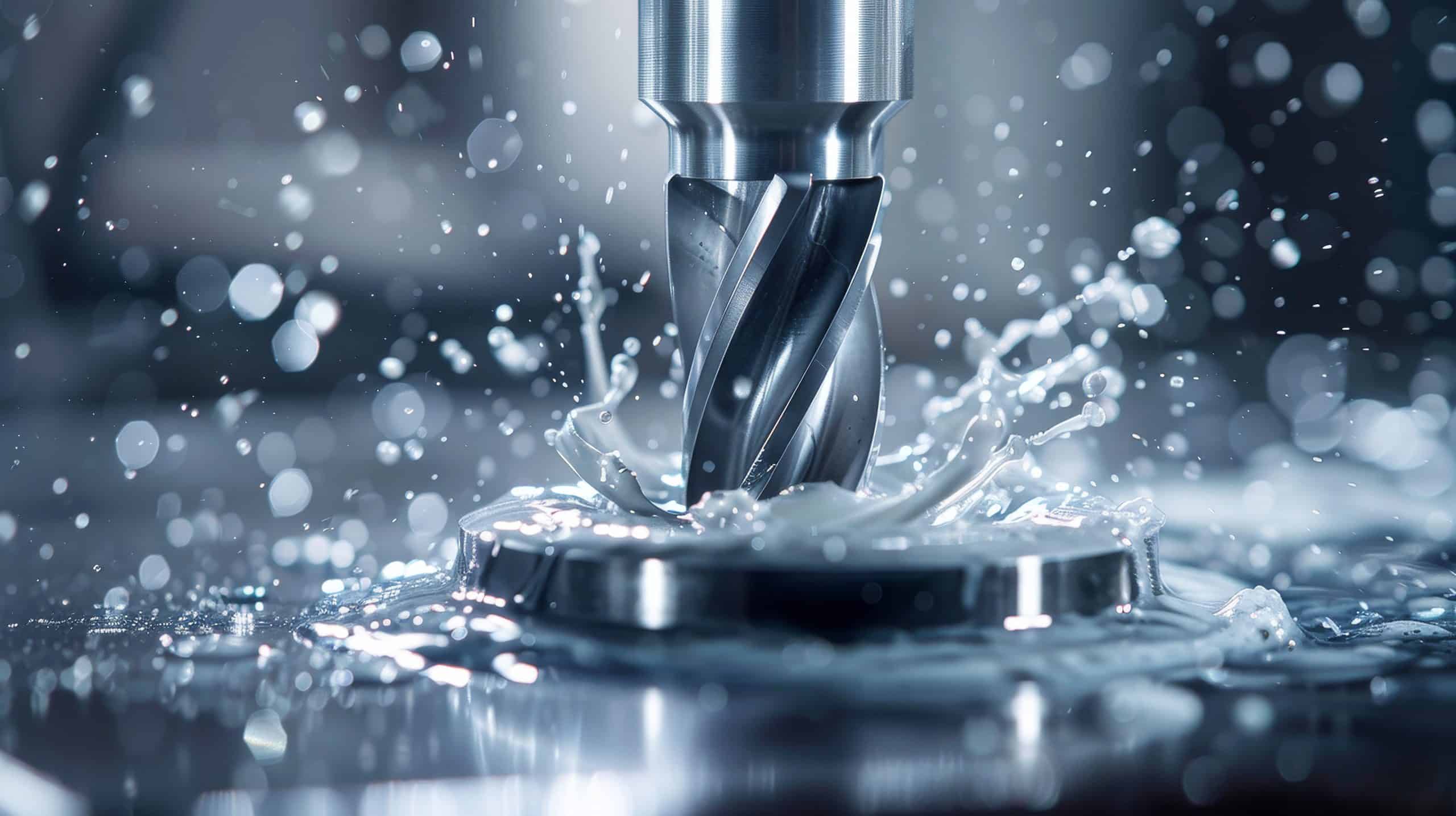
Carbide end mills are an investment. When they snap, chip, or wear out faster than they should, it costs you time, money, and productivity. The good news is that most premature end mill failures come down to a handful of root causes, and nearly all of them are preventable.
Here is what to look for and how to fix it.
Your Feeds and Speeds Are Off
This is the most common culprit. Running a carbide end mill too fast or too slow causes more breakage than almost anything else.
Too high a feed rate overloads the flutes and causes chipping or snapping. Too low a feed rate causes rubbing instead of cutting, which generates heat and accelerates wear. Every combination of tool diameter, material, and coating has an optimal chip load range. If you are guessing at feeds and speeds, you are gambling on tool life.
Fix: Use the manufacturer’s recommended starting parameters and adjust from there. Factor in your material, the tool coating, and whether you are running full-width or peripheral cuts.
Runout Is Higher Than You Think
Even small amounts of spindle or holder runout can dramatically reduce end mill life. As little as 0.002″ of runout shifts the cutting load onto fewer flutes, causing uneven wear and early failure.
Fix: Check your tool holder and spindle runout regularly. Shrink fit and hydraulic holders consistently outperform standard ER collets when tight tolerances and long tool life matter. If you are still seeing premature wear after correcting feeds and speeds, runout is often the next place to look.

Tool Deflection Is Working Against You
Long reach and deep axial cuts increase deflection. When the end mill bends even slightly under load, the cutting geometry changes and the tool begins to fail unpredictably.
Fix: Use the shortest tool that will do the job. Where long reach is unavoidable, reduce your radial depth of cut and increase axial depth instead. This keeps cutting forces more predictable and reduces the bending moment on the shank.
Your Coolant Strategy Does Not Match Your Application
Coolant helps in some applications and actively hurts in others. Interrupted coolant during high-temperature cuts causes thermal shock in carbide, leading to micro-cracking over time. Dry cutting in materials like aluminum can cause built-up edge and chip welding.
Fix: Match your coolant approach to the material and operation. Through-spindle coolant works well for deep drilling and tapping. Air blast is often preferred for aluminum end milling. High-pressure coolant can help with chip evacuation in stainless and titanium but needs to be consistent, not intermittent.
The Tool Is Not the Right Grade for the Material
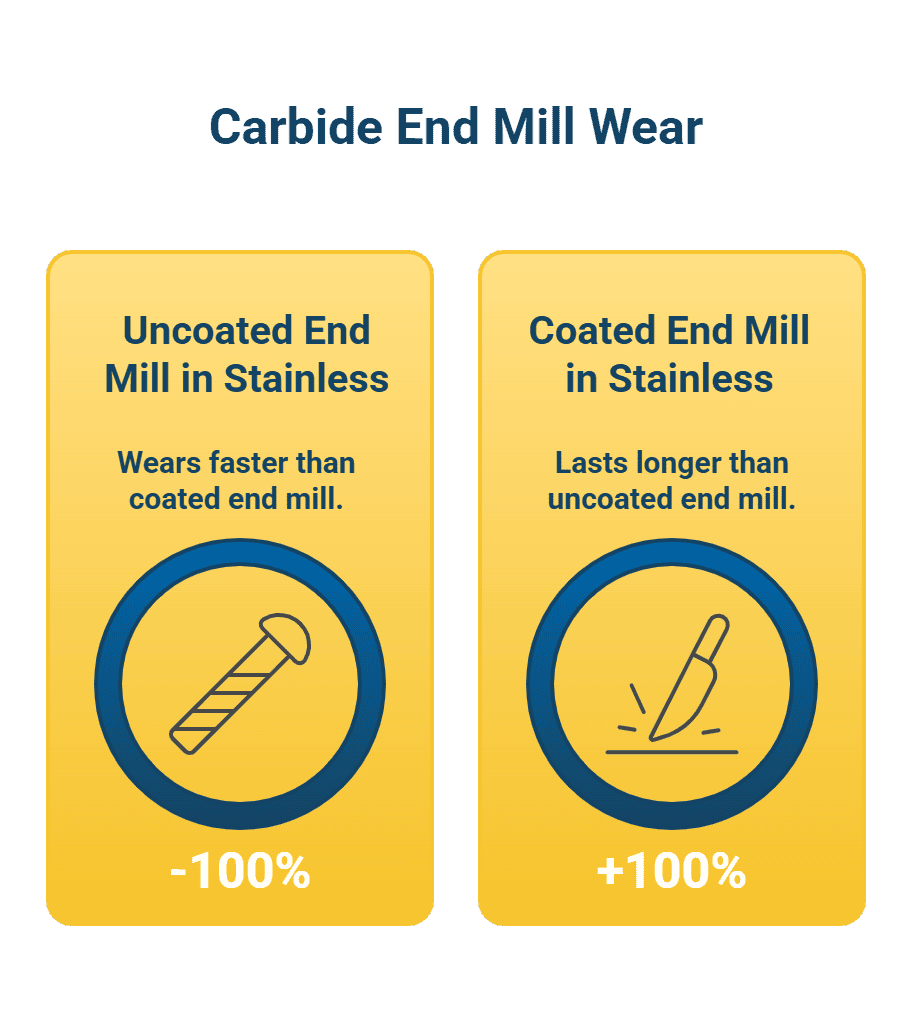
Not all carbide end mills are built the same. A general-purpose end mill run in hardened steel or high-temperature alloys will not last. Coating matters too. An uncoated end mill in stainless will wear faster than one with an AlTiN or TiAlN coating designed for heat-resistant alloys.
Fix: Match the tool spec to the material. If you are regularly machining aerospace alloys, hardened mold steels, or exotic materials, you need a tool engineered for that environment.
The Tool Holder Is the Weakest Link
Even a high-quality end mill underperforms in a worn or low-quality holder. Holder concentricity and gripping force directly affect how the tool behaves under load.
Fix: Treat your tool holding as part of your cutting system, not an afterthought. A precision holder extends tool life and improves surface finish at the same time.
Stop Replacing Tools. Start Solving the Problem.
Carbide end mill breakage is rarely random. There is always a cause, and finding it saves money on every job going forward.
Epic Tool carries a full range of high-performance solid carbide end mills from brands including Millstar, YesTool, and Total Carbide, along with precision tool holding solutions from Techniks. If you are working through a tool life problem or need to spec the right end mill for a difficult application, our team is here to help.
Browse End Milling Solutions or Contact Our Team