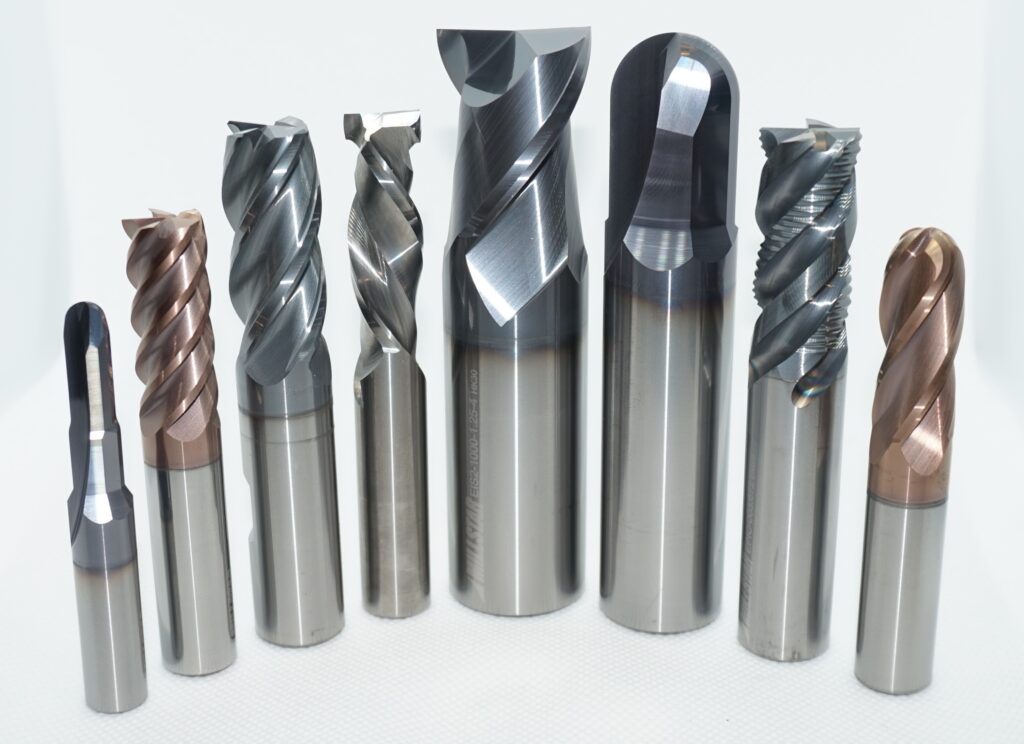
End mills are essential in machining and manufacturing, enabling precision and versatility in cutting operations. However, with so many options, selecting the right end mill for your project can feel overwhelming, especially for beginners. Let’s break down the basics of end mills, their types, and how to choose the right one for your specific needs.
What is an End Mill?
An end mill is a cutting tool used in CNC (Computer Numerical Control) machining to remove material and shape workpieces. Unlike drill bits, which only cut axially (straight down), end mills are designed to cut in multiple directions, including laterally (sideways). This makes them highly versatile for a wide range of applications.
Key Features of End Mills
When choosing an end mill, understanding its key features can help you make an informed decision:
- Flutes: The number of cutting edges on the tool. Common options include 2-flute, 3-flute, and 4-flute designs.
- Material: End mills are typically made from high-speed steel (HSS), carbide, or cobalt. Carbide is preferred for its durability and heat resistance.
- Coating: Specialized coatings like titanium nitride (TiN) or aluminum titanium nitride (AlTiN) improve tool performance and longevity.
- Cutting Diameter: The width of the cutting portion of the tool.
- Helix Angle: The cutting edge angle relative to the tool’s axis, which affects chip removal and cutting smoothness.
Types of End Mills
Different types of end mills are suited for specific tasks:
- Flat End Mills: Ideal for creating sharp edges, slots, and pockets.
- Ball Nose End Mills: Perfect for 3D contouring and finishing due to their rounded cutting edge.
- Corner Radius End Mills: Combine the benefits of flat and ball nose end mills, reducing tool wear and breakage.
- Roughing End Mills: Designed for rapid material removal with a serrated cutting edge.
- Tapered End Mills: Used for machining angled surfaces or molds.
How to Choose the Right End Mill
When selecting an end mill, consider these factors:
Material of the Workpiece
The material you’re cutting determines the tool’s material and design:
- Aluminum and Plastics: Use 2-flute or 3-flute end mills with polished surfaces to avoid chip buildup.
- Steel and Hard Metals: Opt for carbide end mills with coatings to withstand high temperatures and resist wear.
- Composite Materials: Use diamond-coated end mills to minimize delamination and improve precision.
Type of Cut
- Slotting and Pocketing: Flat-end mills provide clean cuts and sharp edges.
- Contouring: Ball nose end mills are ideal for smooth, curved surfaces.
- Roughing: Roughing end mills are efficient for bulk material removal before finishing cuts.
Machine Capabilities
Consider the limitations of your CNC machine, such as spindle speed and power. High-speed machines pair well with carbide end mills, while slower machines may perform better with HSS tools.
Tool Life and Cost
Investing in high-quality end mills may cost more upfront but can save money in the long run by reducing tool replacement frequency and improving cutting efficiency.
Best Practices for Using End Mills
To get the most out of your end mills, follow these tips:
- Select the Right Speed and Feed Rates: Proper settings optimize tool life and cutting performance.
- Use Coolants or Lubricants: Reduce heat buildup and improve surface finishes.
- Inspect and Maintain Tools Regularly: Check for wear, chipping, or dull edges to avoid damaging your workpiece.
- Choose the Correct Tool Holder: Secure your end mill properly to minimize vibration and ensure accuracy.
Common Mistakes to Avoid
- Using the Wrong Tool for the Job: Ensure the end mill’s design matches your cutting requirements.
- Skipping Maintenance: Dull tools can ruin your workpiece and strain your machine.
- Ignoring Material-Specific Needs: Using the wrong flute count or coating can lead to poor results and tool wear.
Conclusion
Selecting the right end mill is crucial for achieving precision, efficiency, and high-quality results in machining. By understanding the types of end mills, their features, and the factors influencing your choice, you’ll be well-equipped to tackle any project. At Epic Tool, we’re here to support your machining needs with a wide range of top-quality end mills. Contact us today and let us help you find the perfect tool for your next project!