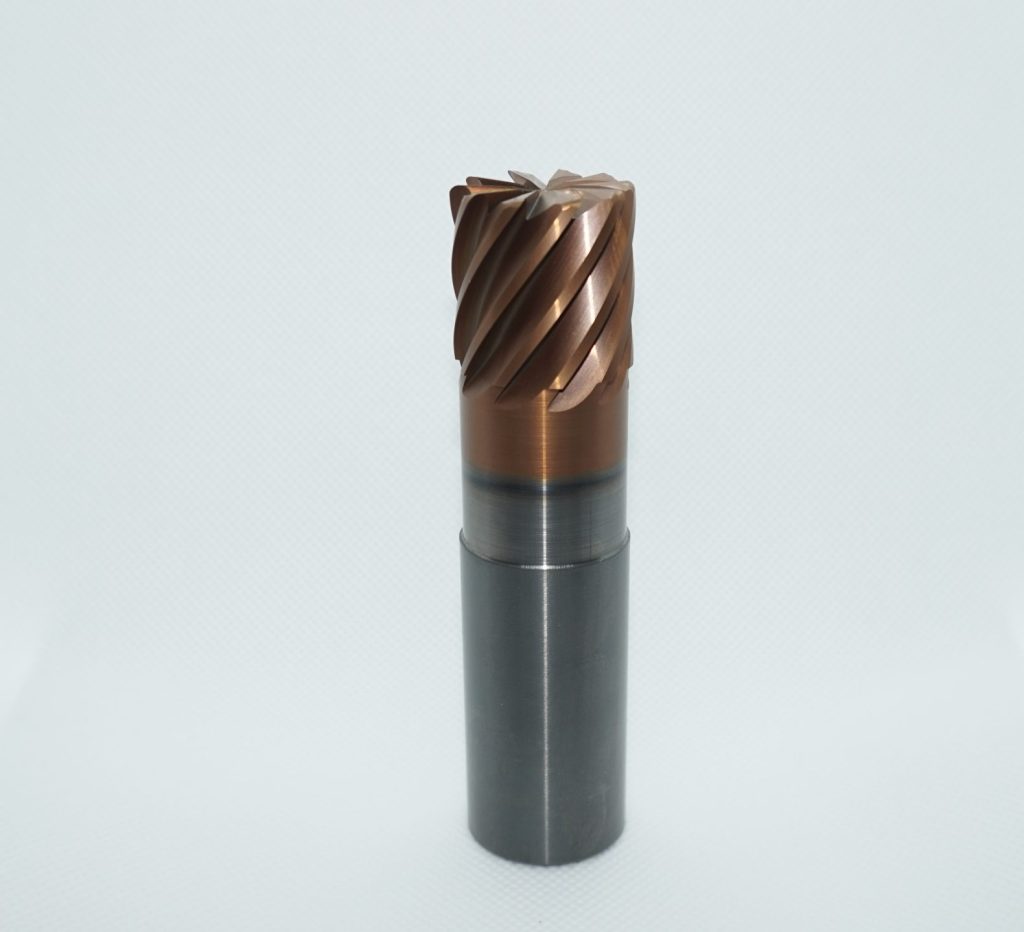
Carbide end mills are essential tools in precision machining, and their performance is heavily influenced by the carbide grade used in their construction. Different carbide grades impact the tool’s durability, cutting efficiency, and longevity. Understanding these variations helps machinists select the best end mill for their specific applications, improving productivity and reducing tool wear.
What Are Carbide Grades?
Carbide grades are determined by the composition of tungsten carbide (WC), cobalt (Co), and other alloying elements. The hardness, toughness, and wear resistance of the end mill depend on the ratio of these components.
How Carbide Grades Affect Performance
- Grain Size and Hardness
- Ultra-fine Grain Carbide: Provides higher hardness and wear resistance, which is ideal for finishing applications and high-speed machining.
- Fine Grain Carbide: Offers a balance between toughness and hardness, suitable for general-purpose milling.
- Medium & Coarse Grain Carbide: More impact-resistant, making it ideal for roughing applications and interrupted cuts.
- Cobalt Content and Toughness
- Low Cobalt Content (6-8%): Increases hardness and wear resistance but has lower toughness. Best for finishing applications in non-interrupted cuts.
- Medium Cobalt Content (8-12%): It balances toughness and heat resistance, making it ideal for heavy-duty operations and most general milling applications.
- High Cobalt Content (12-15%): Enhances toughness but reduces heat resistance. It is suitable for interrupted cuts and machining difficult materials like stainless steel.
- Coatings and Their Impact
- Carbide grades are often paired with coatings to enhance tool life and reduce heat buildup. Some popular coatings include:
- TiAlN (Titanium Aluminum Nitride) – Provides excellent heat resistance and is suitable for general machining with coolant applications.
- AlTiN (Aluminum Titanium Nitride) – Superior for hardened steels and high-temperature dry machining applications.
- Diamond Coating – Provides extreme wear resistance for graphite, composites, and abrasive materials. It should not be used on ferrous materials like steel. For aluminum, uncoated polished carbide is recommended.
- Carbide grades are often paired with coatings to enhance tool life and reduce heat buildup. Some popular coatings include:
Selecting the Right Carbide Grade for Your Application
- High-speed finishing: Ultra-fine grain carbide with TiAlN coating provides excellent heat resistance and durability.
- General-purpose milling: Fine grain carbide with TiCN or AlTiN coating provides excellent durability and oxidation resistance, making it ideal for general-purpose milling.
- Roughing & interrupted cuts: Coarse grain carbide with AlTiN or TiAlN coating offers high toughness for challenging operations.
- Hard materials (Hardened steel): Ultra-fine grain carbide with AlTiN coating ensures prolonged tool life and optimal performance.
- Non-ferrous & composites: Diamond-coated carbide is best for composites, while uncoated polished carbide is ideal for aluminum.
Conclusion
The correct carbide grade in end mills is crucial for optimizing machining performance and tool longevity. Manufacturers can achieve better results, reduce costs, and improve efficiency by considering grain size, cobalt content, and coatings.
For high-quality carbide end mills tailored to your application, Epic Tool offers advanced solutions designed for precision and durability. Contact us today to find the right tool for your needs!